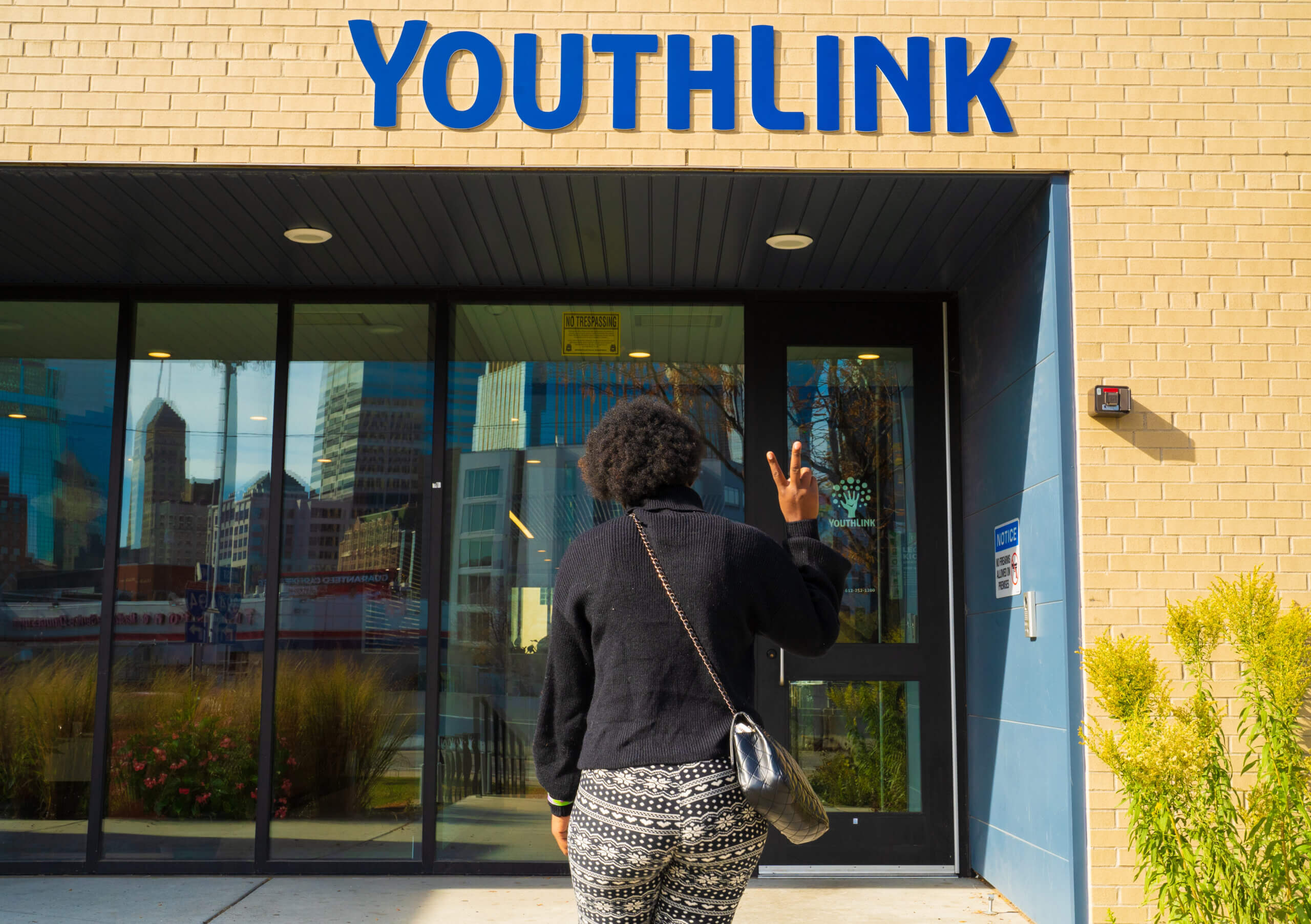
New Research Shows Drop-In Centers Help Youth Experiencing Homelessness
Minneapolis, MN, March 28, 2020. New findings from an interdisciplinary team of researchers
funded by The Kresge Foundation shows that young people experiencing homelessness benefit
from services provided by drop-in centers staffed with case managers, a key resource for such
youth supported by taxpayers, foundations, and individual donors. These findings were
presented today at the Spring 2022 Conference of the National Human Services Data
Consortium, held at the Hyatt Regency Minneapolis.
Each year, more than 7,500 youth ages 16-24 who live apart from family or guardians
experience homelessness in Minnesota, and many find their way to drop-in centers. Until now,
rigorous evidence has been hard to come by demonstrating that drop-in centers are effective
beyond offering needed basic services such as meals, showers, and a respite from the street.
Drop-in centers with case management services aim to help youth experiencing homelessness
find housing, complete their educations, gain job skills, and resolve issues they may have with
the criminal justice system.
The new study followed a cohort of 1,229 youth who visited YouthLink, Minneapolis’ largest
drop-in center, over six years before the pandemic using integrated administrative data to
assess how they fared on housing, education, criminal justice involvement and use of taxpayerfunded
financial support programs.
This research compared the overall impact of YouthLink’s drop-in and case management
services model with outcomes for a very similar group of youth who experienced homelessness
but never visited YouthLink. This comparison set a high bar for success because the youth in the
comparison group likely received social services from other providers.
In the comparison, the YouthLink cohort did better in several areas. For instance, they:
• Were nearly twice as likely to use permanent supportive housing;
• Stayed more than two months longer in permanent supportive housing;
• Were nearly twice as likely to earn a GED.
An infographic, a research brief on the study results and a white paper are available at
http://www.youthlinkmn.org/the-cost-of-homelessness/
The research team concluded that the improved outcomes of the YouthLink cohort likely
resulted largely from Hennepin County’s decision in 2011 to lower barriers to many services by
locating a wide range of services at YouthLink, including eligibility determination for
government programs, and legal, health, employment, education, and housing support
services.
Additional results demonstrated that case managers were also critical to better outcomes. The
research team assessed how case managers developed relationships with youth and
encouraged behaviors that allow young people to successfully navigate relationships and roles
in their lives. They provided specific support to help them achieve their goals in education,
housing, and employment. Stronger relationships were significantly associated with desired
outcomes in many areas.
Members of the YouthLink cohort had greater odds of receiving General Assistance and used
slightly more government financial support over the six years of follow-up. However, both the
YouthLink and comparison groups substantially decreased their reliance on government
support over time, potentially suggesting that many had found employment. After six years, 37
percent fewer YouthLink clients relied on government programs, and taxpayer costs decreased
46 percent.
“The drop-in and case management model, as we observed it during our research at YouthLink,
helps youth experiencing homelessness move forward in their lives.” said Dr. Steven Foldes, an
Adjunct Associate Professor of Epidemiology and Community Health at the University of
Minnesota. “It’s a win-win for youth and for funders.”
“We conclude that preventing homelessness is best, but when youth homelessness occurs it is
solvable, and this practice model is part of the solution,” said Dr. Kristine Piescher, Director of
Research and Evaluation at the Center for Advanced Studies in Child Welfare at the University
of Minnesota.
Rich Melzer, the new CEO of YouthLink commented, “These findings will be a useful tool that
we intend to leverage and weave through our organization in the advancement of our mission
and strengthening of our partnerships.”
The research was conducted by a multidisciplinary team including: Steven Foldes, Ph.D.,
Principal of Foldes Consulting LLC and an Adjunct Associate Professor of Epidemiology and
Community Health at the University of Minnesota; Kirsten Hall Long, Ph.D., President of K. Long
Health Economics Consulting, LLC; Kristine Piescher, Ph.D., Director of Research and Evaluation
at the Center for Advanced Studies in Child Welfare at the University of Minnesota; Katelyn
Warburton, M.A., a homeless programs administrator at the Office of Economic Opportunity in
the Minnesota Department of Human Services; Saahoon Hong, Ph.D., an Assistant Research
Professor at the Indiana Division of Mental Health and Addiction at Indiana University; Nina L.
Alesci, Ph.D., M.P.H., an epidemiologist and independent research consultant.