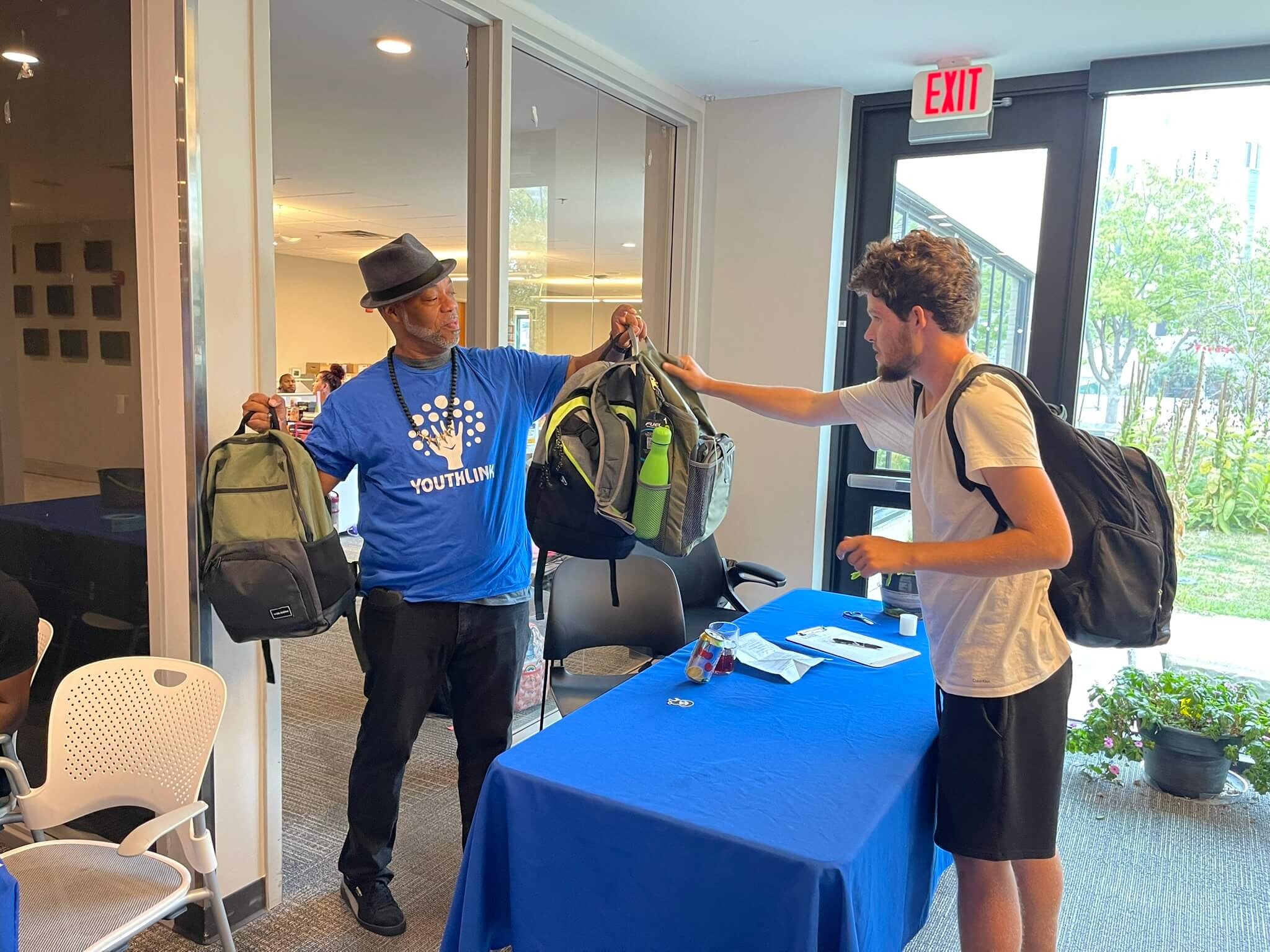
What does it mean to be aware of homelessness?
For Homelessness Awareness Month, YouthLink’s Housing Director, Kevin Nye, reflects on what it really means to be aware of homelessness. In this month’s blog post, Kevin explores why awareness matters, challenges common misconceptions about what homelessness looks like, and shares ways we can turn awareness into meaningful action. Because ending homelessness starts with seeing it—and recognizing the role we all play in addressing it.
What does it mean to be aware of homelessness?
By Kevin Nye, YouthLink Housing Director
November is Homelessness Awareness Month, and that can mean a lot of things to a lot of different people. For those of us who work at organizations like YouthLink, it can feel a bit perfunctory. We are always aware of homelessness–very aware, in fact–it’s what we do.
But most of the world isn’t like YouthLink (sadly), and we take time each year to bring attention to homelessness to remind us of something that we’re so quick to forget. Homelessness, like many crises, metastasizes in the dark–our lack of awareness allows homelessness to get worse both in quantity and quality. More people become homeless, and their homelessness is much more miserable, the more we choose unawareness.
So this November, what could it look like to choose awareness? Here are a few ideas:
1. Don’t look away.
One of the biggest barriers to our awareness of homelessness is our tendency to quickly look away from it. Homelessness makes us uncomfortable–we empathize but feel powerless to do anything; what starts as a deeply human reaction has nowhere to go, and eventually turns into shame, guilt, or even resentment. With nowhere to aim our empathy, a positive response turns into a negative projection. Rather than do the hard work of discerning what to do with our compassion, we look away.
This looking away is endemic. A decade ago, the New York City Rescue Mission conducted an experiment where they asked beloved members of people’s family to “dress up” as an unhoused person and ask for money on their loved one’s path to work. Over and over again in this experiment, people walked past their own brother, wife, son, and mother without noticing them–simply because they were dressed as “homeless”.
Awareness starts with choosing not to look away at the homelessness that is right in front of our eyes.
2. Know that the majority of homelessness is invisible
The hostess at your favorite restaurant. Your son’s classmate in high school. The security guard at the concert at Target Center. These are not just hypotheticals—these are the day-to-day lives of actual YouthLink clients. When you see and interact with them in the community, you would never know that homelessness is part of their past, or even their present. That’s what we call invisible homelessness. It often looks like people who are couch-hopping, living in cars, or in shelters or transitional housing.


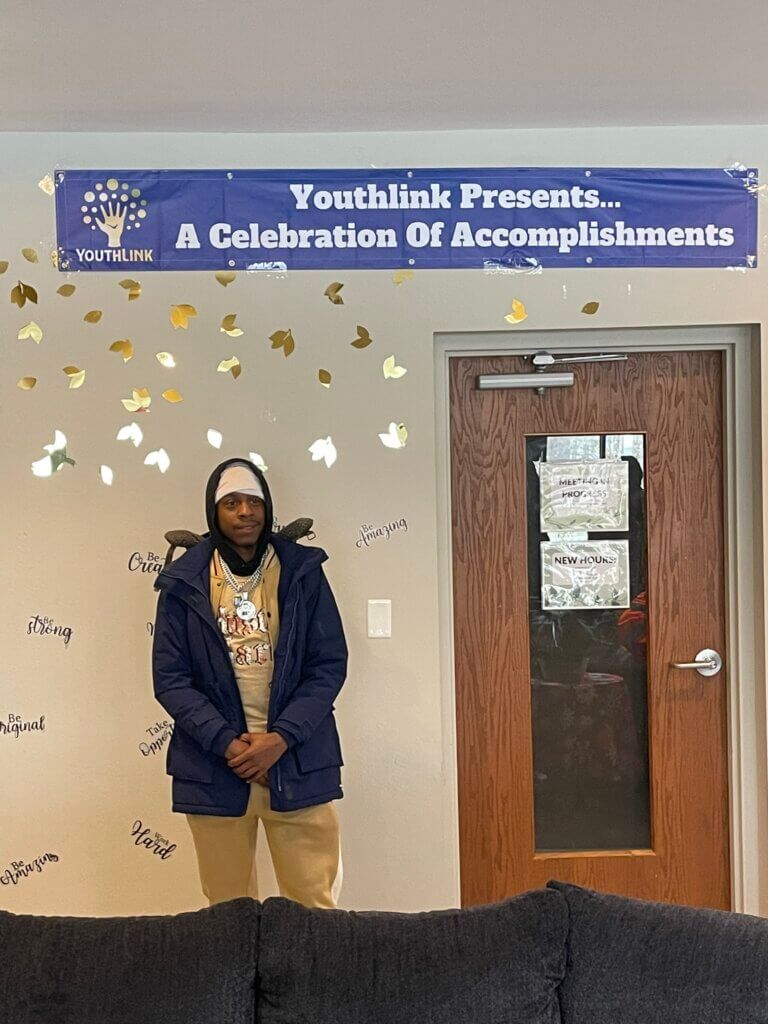
Youth Accomplishments Celebration at YouthLink’s Drop-In Center
Being aware of homelessness means knowing all the different forms that homelessness can take. It doesn’t mean you should assume that everyone you meet is unhoused; but it does help dispel some of the myths about homelessness–the ideas that “all homeless people are like [fill in the blank with your favorite stereotype.] Knowing that homelessness looks many different ways helps us think through all of the different solutions that are needed, and how much they need to scale. For example, the 2023 Wilder Foundation study concluded that approximately 13,000 young people experienced homelessness in the entire state of Minnesota. In that same year, YouthLink alone served 1,945 unique individuals. Organizations like YouthLink serve not only the visible homelessness, but invisible homelessness–as well as preventing homelessness before it even begins.
3. Turn awareness into action
Awareness is the first step, but it’s not worth much by itself. You wouldn’t return to a doctor who only diagnosed your health problems but never treated them. What we do with our awareness is crucial; as I mentioned above, it needs somewhere to go. So, what will you do with your awareness?
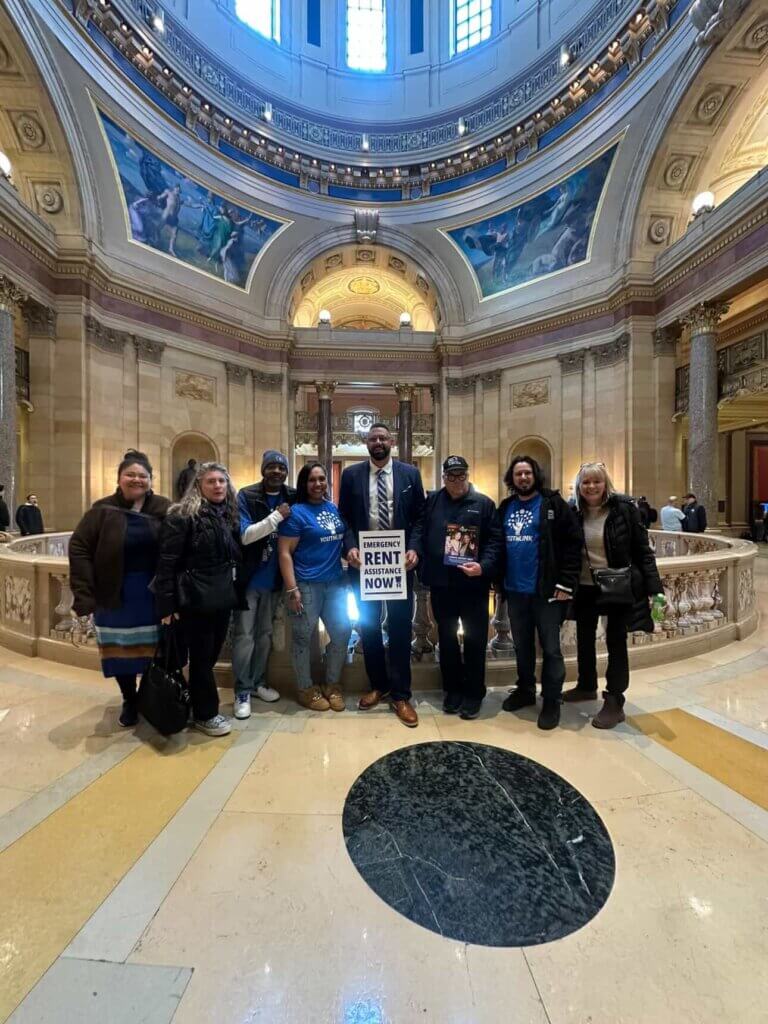
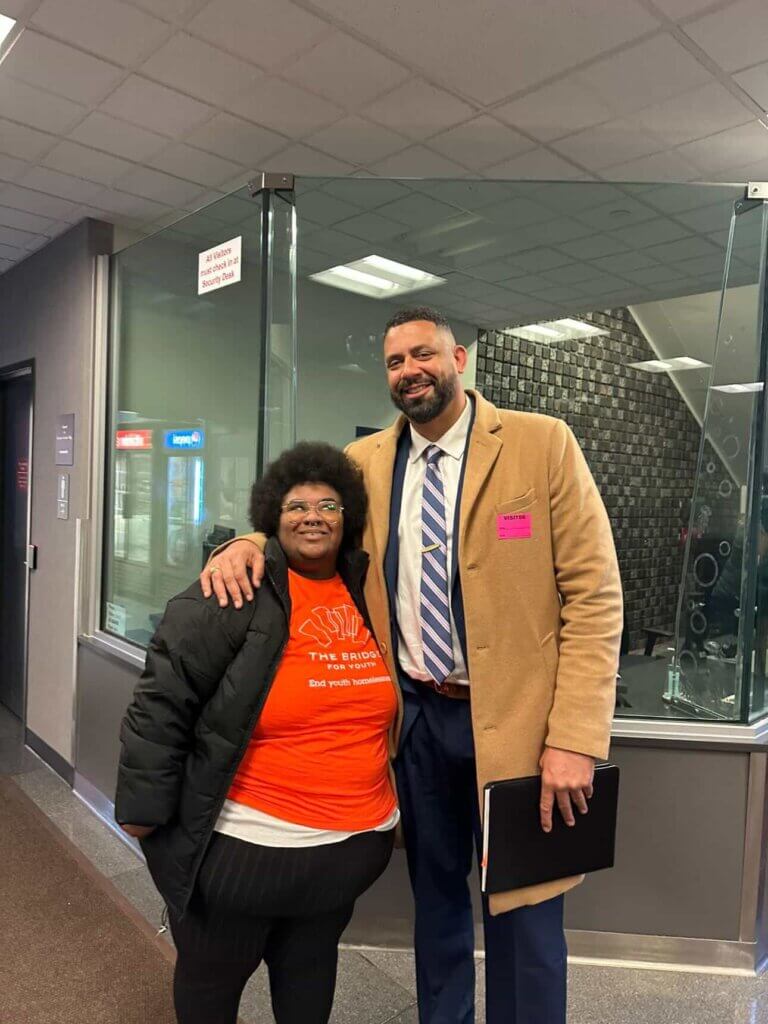
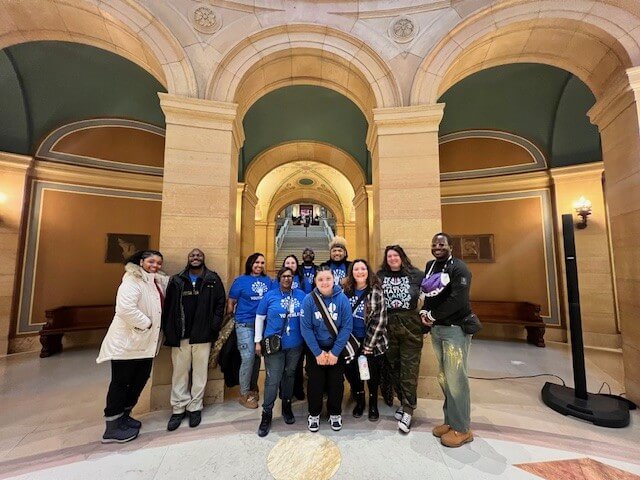
YouthLink Staff & Voices of Youth Advisory Council at 2026 Homeless Day on the Hill
The trick is to not be overwhelmed. The problem is big and complex, yes. Everyone must do something, but no one person is expected to do everything. Some of us make ending homelessness our entire life’s work in direct service. Others use their voice to advocate for policies that reduce homelessness. Some will give their time to volunteer in community; others will give from their abundance to meet others’ scarcity. Finding your role in ending homelessness gives your awareness somewhere to go.
When you do these things–truly becoming aware of homelessness and knowing that you play a role in ending it–our neighborhoods become safer, our communities get brighter, and we all become more in touch with what it means to be home.
If you’re wondering where to start, start at YouthLink. We’d be happy to show you what this can look like… we do it every day.
Your support helps YouthLink provide young people experiencing homelessness with the resources, relationships, and opportunities they need to build a future of their own. Help turn awareness into action with a gift to YouthLink. Donate to YouthLink today.