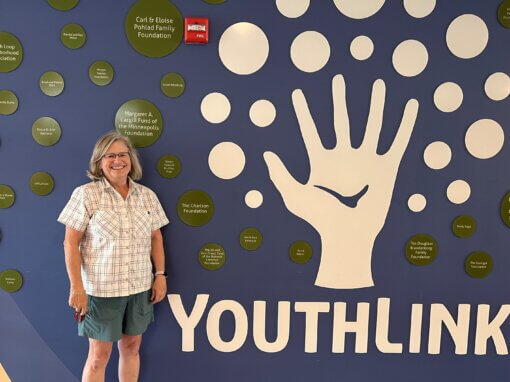
Inside YouthLink’s Onsite Clinic: Where Holistic Healthcare Meets Youth-Centered Support
At YouthLink’s Drop-In Center in downtown Minneapolis, young people experiencing homelessness can walk in for a hot meal, a shower, a clean outfit, a mental health appointment—and a doctor’s visit. Operated by Hennepin County’s Health Care for the Homeless (HCH) program, YouthLink’s onsite clinic is an essential part of the “one-stop-shop” model we’ve built to meet the complex, interconnected needs of youth experiencing homelessness.
In 2024 alone, 1,110 young people accessed medical care through the clinic. Many of them came without insurance, identification, or trust in the healthcare system—but they found compassionate, consistent care through this critical partnership.
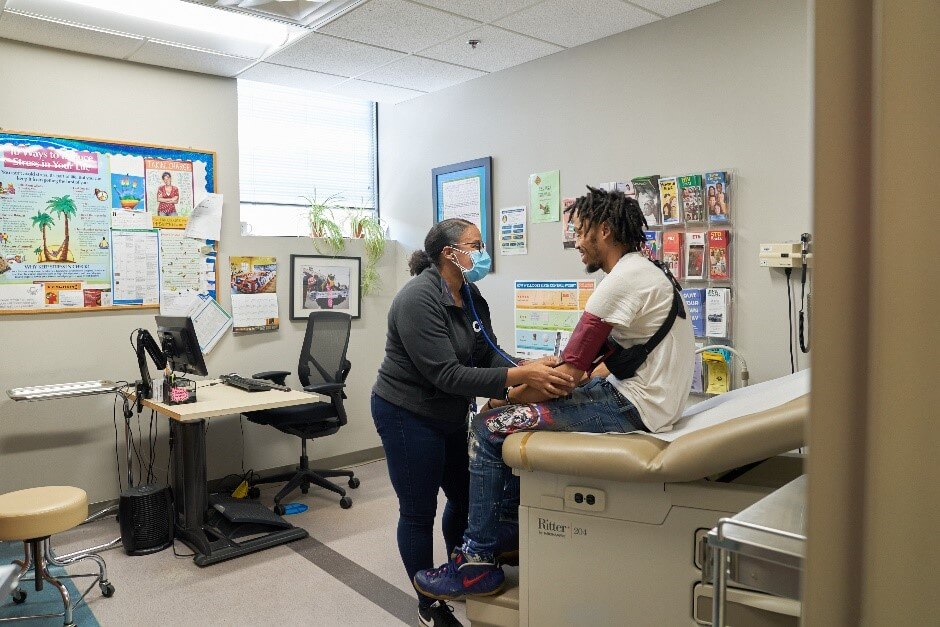
“What we do here is really wraparound care,” says Julie Churcher, Nurse Operations Manager at the clinic. “We try to piggyback off the relationships that YouthLink staff already have with young people. We table out in the Drop-In Center to make ourselves visible—just being out there, having youth see our faces over and over again. That kind of presence really helps more than you’d think to build rapport and become a trusted person in the building. Sometimes we’re just meeting a basic need, like offering a bus token or helping them access food or clothing—which YouthLink can provide easily—but those small interactions open the door to bigger conversations and deeper care.”
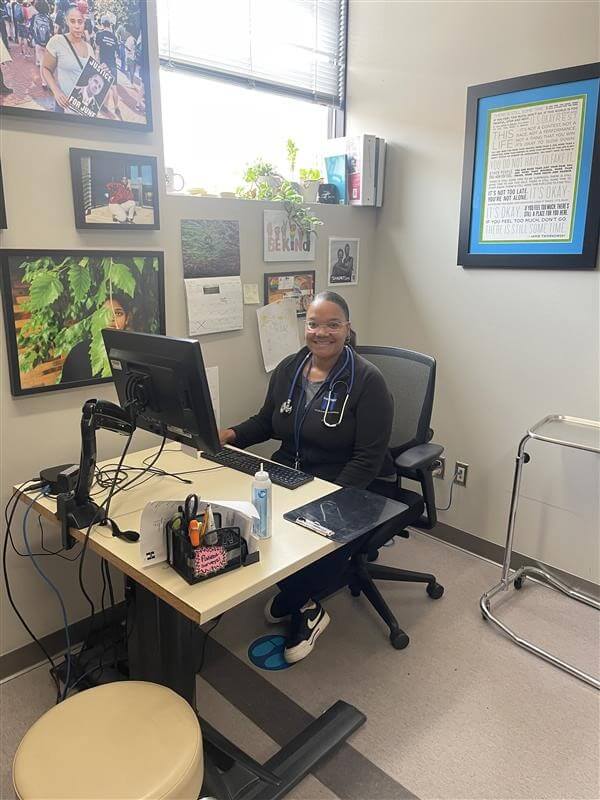
A 20-Year Partnership Rooted in Trust
Health Care for the Homeless has been embedded at YouthLink for nearly two decades, offering low-barrier, walk-in medical support four days a week. The clinic is staffed by a robust team, including registered nurses, nurse practitioners, physicians, a reproductive health specialist, a peer recovery specialist, a therapist, and—new in 2024—a psychiatric nurse practitioner who can prescribe mental health medications on-site.
This depth of services reflects a trauma-informed, holistic approach: medical care is never isolated from the young person’s broader story.
“Many of the youth we see are in survival mode,” Julie explains. “Before you can even have a conversation about managing a health condition, you need to meet the most basic needs: food, safety, housing. That’s why our model works—it’s all here.”
Addressing Health Disparities, One Visit at a Time
Young people experiencing homelessness face enormous challenges when it comes to accessing health care—and many arrive at the clinic without insurance. This lack of coverage can be the result of multiple systemic barriers: unstable housing, difficulty navigating complex enrollment systems, lack of access to personal documents like IDs or birth certificates, aging out of foster care or family health plans, or simply not knowing what they’re eligible for.
To help address this, the clinic includes a MNsure navigator who can meet with youth on-site:
“We have someone on site that can help get set up with insurance. She’s here once a week—Jill. She gets people attached to MNsure and is able to navigate in the moment, too. So even if she’s not on site, we can reach out to her virtually.”
Once connected, young people can receive a wide range of services, including reproductive and sexual health care, support for diabetes and asthma, chronic condition management, mental health therapy and medication, wound care, and more. This low-barrier model ensures that youth don’t need to navigate multiple systems or appointments to get help—care is available where they already are.
Some young people seen in the clinic are managing serious conditions like epilepsy, with no consistent way to access or organize their medication. In cases where youth are experiencing uncontrolled seizures, clinic staff work closely with them and the YouthLink Drop-In team to develop a daily medication routine. If a young person cannot reliably manage their meds on their own, staff will coordinate a plan for them to return to the clinic each day for supervised administration—creating a structure of safety, support, and consistency that would otherwise be out of reach.
The clinic’s services are designed with health equity in mind. While young people typically experience fewer chronic conditions than older adults, many of the health concerns seen at the clinic are rooted in systemic disparities—especially those tied to race, sexual exploitation, and unsheltered living. Youth of color are overrepresented in the population of young people experiencing homelessness, and that is disproportionality reflected in higher rates of untreated chronic illness, gaps in reproductive care, and poor mental health outcomes.
Living outdoors or in unstable housing exacerbates existing health concerns. Conditions like asthma or epilepsy become harder to manage without a safe, stable environment. Youth without access to regular hygiene facilities may struggle with skin infections, wounds, or recurring illness. And those experiencing exploitation face significant barriers to reproductive care and STI prevention.
To meet the growing demand for specialized care, the clinic has added a reproductive health specialist to the team, available twice a week to provide pregnancy testing, birth control, STI screening and treatment, and other essential services.
HCH’s street outreach team plays a critical role in extending the reach of these services beyond the clinic walls—building relationships with youth who are living in encampments, on transit, or in other unsheltered settings and helping them access care when they’re ready.
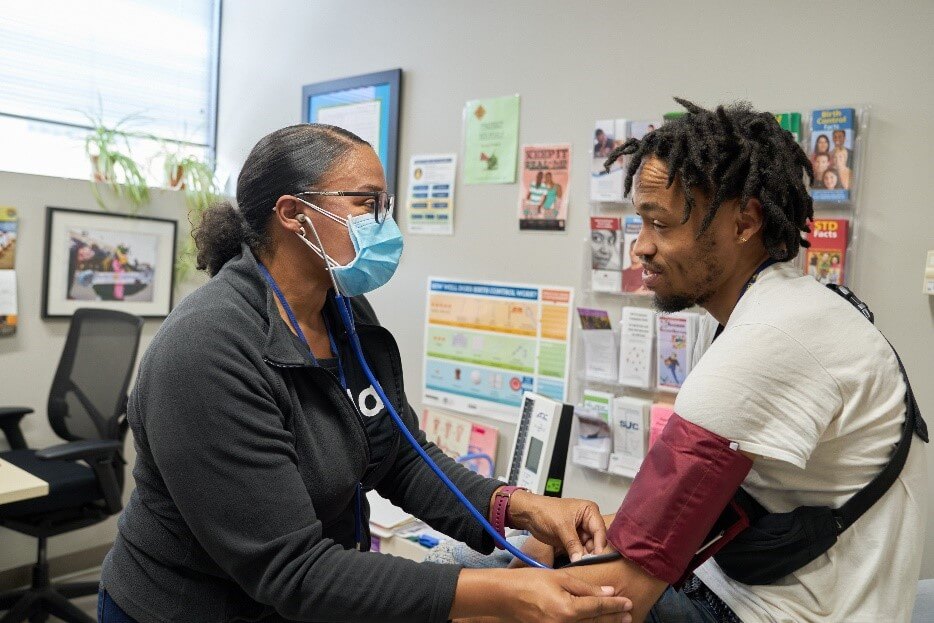
Changing Misconceptions Through Compassionate Care
Julie, who has worked in community-based nursing for over 25 years, is quick to address common myths about young people experiencing homelessness.
“Some people assume unhoused youth are lazy or don’t want to work,” she says. “But the truth is, most haven’t had access to the supports they need to get to a place of stability. Many are dealing with trauma, addiction, or just trying to survive. They need housing, community, and a plan they can actually execute.”
Every day, the clinic team walks alongside youth as they take steps toward stability—whether that means helping manage a seizure disorder, offering harm reduction support, or simply handing out a bus token and saying, “We’re glad you’re here.”
A True One-Stop-Shop for Youth Wellbeing
Because the clinic is integrated within YouthLink’s Drop-In Center, staff can connect youth to housing case managers, pick out new clothing in our Clothing Closet, grab a snack from the food pantry, or explore expressive outlets like Kulture Klub Collaborative and the onsite music studio.
“This partnership is really important,” Julie says. “If a young person comes to see me, I can immediately ask if they’ve connected with a housing case manager. That’s one of the biggest things we can do to help them—and it’s all in the same building.”
YouthLink has also partnered with HCH to train YouthLink staff on harm reduction, including Narcan distribution and overdose prevention, ensuring every team member is equipped to save lives in an increasingly dangerous landscape.
A Call to Action
The 1,110 young people who visited Health Care for the Homeless’s clinic last year aren’t just patients—they’re artists, musicians, leaders, and survivors. They’re navigating unimaginable barriers, and yet they continue to show up.
“There’s a growing need for wraparound services like this,” Julie emphasizes. “Our work at the clinic wouldn’t be possible without YouthLink’s team and the trust young people have in this space.”
If you’re a YouthLink supporter or donor, your contributions help keep this unique model running—ensuring young people can access healthcare, housing, and supportive resources, all under one roof.
Want to support holistic, youth-centered healthcare? Consider making a donation to YouthLink, or explore our Amazon Wish List to meet urgent needs for hygiene items, clothing, and pantry staples.
Read more about our onsite mental health resources and partnership with Avivo here.